Snorkeling
Snorkel at three stops
No certificate needed
- Length2 to 9 hours by option
- Rating4.68 from 5,062
- Pricefrom $17
Pick-your-trip helper
Two taps to your depth
Say whether you hold a dive certificate and how deep you want to go, and the matching trip appears with its from-price.
Nearest equivalent
from $247
For certified divers only: Manta Point, Crystal Bay and SD Point.
Nearest equivalent
from $31
It lists a 15-minute introductory dive for guests without a certificate.
Nearest equivalent
from $17
About 2 hours of snorkeling, for confident swimmers.
The same reefs sit under both kinds of boat. What changes is your certificate, the hours you spend below the surface, the price and the risk you accept. Here is how the listings and the official advice line up.
Editorial team, nusapenidasnorkeling.quest · Updated November 3, 2026 · Reading time about 6 min
Begin with this
Nusa Penida's reefs do not belong to divers or to snorkelers. Both groups visit the same named places. The island's dive locations include Penida Bay, Batu Lumbung, which is known as Manta Point, Batu Meling, Batu Abah, Toya Pakeh and Malibu Point.3 A scuba day on a listing visits Manta Point, Crystal Bay and a drift site called SD Point. Diving at Manta Point and snorkeling at the surface above it are two views of one reef.
Our snorkel session visits Manta Bay, Gamat Bay and The Wall, and its itinerary lists Crystal Bay and SD Point as optional alternatives to The Wall. A study of manta rays calls Manta Bay and Manta Point shallow bays between 7 and 25 meters deep, fringed by steep rocky cliffs and deep water.1 That depth is why the same cleaning station can hold a diver on the bottom and a snorkeler at the surface.
The choice is less about where to go than about how long you want to look, how much gear you want to manage and whether you hold a certificate. Both formats in the listings are guided outings with a briefing, a boat and an itinerary that the guide may change on the day, so you are not choosing between a serious option and a casual one. The rest of this page works through each of those in turn, with the numbers from the listings.
Three formats side by side
| Format | The requirements | Minutes in the sea | Listing |
|---|---|---|---|
| Snorkel session | Confident open-water swimming | Roughly 2 hours | Our session |
| Intro dive | No card needed | 15 minutes | Dive-center outing |
| Certified dives | Open Water or above | Three dives | Three-dive day |
Requirements and times as each listing states them; the dive-center outing lists 40 to 50 minutes for each certified dive and 15 minutes for the intro dive.
The entry requirement is stated plainly on the snorkel listings: guests must be confident swimmers who are comfortable in open ocean conditions. Another listing adds that snorkeling takes place in open ocean, that you should feel at ease in swell and waves, and that a life jacket is strongly recommended in the water.
In return you get the lightest kit and the lowest price. Our session lists about 2 hours of snorkeling in total, with the three stops given 40 minutes each, and it starts from $17. A GoPro film of the session is emailed 8 to 12 hours afterwards, so you do not need to hold a camera while you try to keep up with the guide.
The limits are also plain. You see the reef from above, you spend a fixed block of time in the water and you depend on the surface conditions. If Manta Bay cannot be used because of weather or sea state, the listing says a safe alternative snorkeling site is visited instead.
What it costs to start
Each bar is the listing's own from-price in US dollars, so the cheapest option on its date picker; real totals change with the option and group.
The three-dive listing is for certified divers only, with an Open Water certificate or above, and it asks you to bring your certification card, swimwear, a towel and dry clothes. It lists hotel pickup from Sanur, Kuta, Seminyak and Jimbaran, or a meeting at the dive center in Sanur.
The day is long. It lists 8 to 9 hours, starting with a safety briefing and a speedboat crossing of 45 minutes from Sanur Harbour, then dives at Manta Point, Crystal Bay and SD Point with a lunch stop in between. Light snacks and water are provided, but no full meal is included, and the dive sites may change with weather or sea conditions. That is what Nusa Penida scuba diving looks like when the whole day is built around it.
The price reflects the format: it starts from $247, against a rating of 4.85 from 24 reviews. The review count is small next to the snorkel listings, which is worth knowing when you compare scores. The listing also says mola-mola are best from July to October and that manta sightings are common year-round.
Choose your entry
Snorkeling
No certificate needed
Mixed
Dive, intro dive or snorkel
Scuba
Certified divers only
A dive-center listing covers the gap between the two. Its morning outing runs from 8:00 AM to 1:30 PM and offers two dives of 40 to 50 minutes for certified divers, a 15-minute introductory dive for guests without a certificate, or two snorkel dives at Manta Point and Crystal Bay, with a buffet lunch in between.
An afternoon outing from 2:00 PM to 3:30 PM adds one dive of 40 to 50 minutes at SD Point or Toyapakeh, which is a drift dive along a drop-off. The center is affiliated with SSI and FFESSM, its groups are small and its instructors speak French, English, Spanish, Indonesian and Portuguese.
It lists 5 to 6 hours in all, a rating of 4.82 from 31 reviews and a starting price of $31. That start price most likely belongs to the cheapest option, so read which option the date picker applies before comparing it with the other trips. For a first-timer who is curious about scuba, the 15-minute introduction lets you test the feeling without committing a full day. Tell the instructor about ear trouble, nerves or medical conditions before the boat leaves the jetty, not after you are kitted up.
Group price estimate
Enter how many are going and compare three ways in
Weigh up 3 trips
Enter how many are going and compare three ways in
≈
View≈
View≈
ViewThe lowest GetYourGuide prices, converted at the ECB rate; the exact total appears at checkout.
The dive day, in order
Up at dawn
Hotel pickup from Sanur, Kuta, Seminyak or Jimbaran, then a safety briefing.
At Sanur
The speedboat crossing from Sanur Harbour takes 45 minutes.
Morning
Swimming and scuba diving at the cleaning station.
Next
A scuba dive in the bay known for sunfish in season.4
Midday
Light snacks and water are provided and no full meal is included.
Afternoon
A drift dive before the speedboat and car ride home.
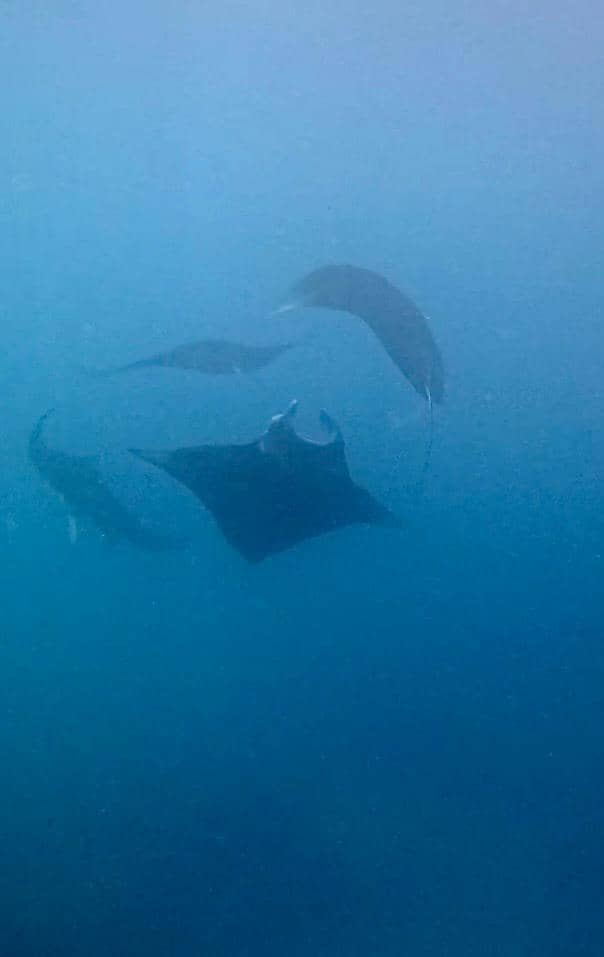
Mantas are the headline for both. Manta rays were recorded at the island's reefs throughout the year, and Manta Point is the site where the study puts cleaning and courtship.6,7 A snorkeler may meet a manta near the surface at Manta Bay, where the same study finds juveniles feeding, while a diver at Manta Point watches the rays hover over the reef.7
Sunfish belong to the diver's list. Upwelling of colder water peaks in August and September, and ocean sunfish numbers are high in Crystal Bay from August to October.4 A research paper on giant sunfish describes the species as seasonally important for scuba tourism in Bali.8
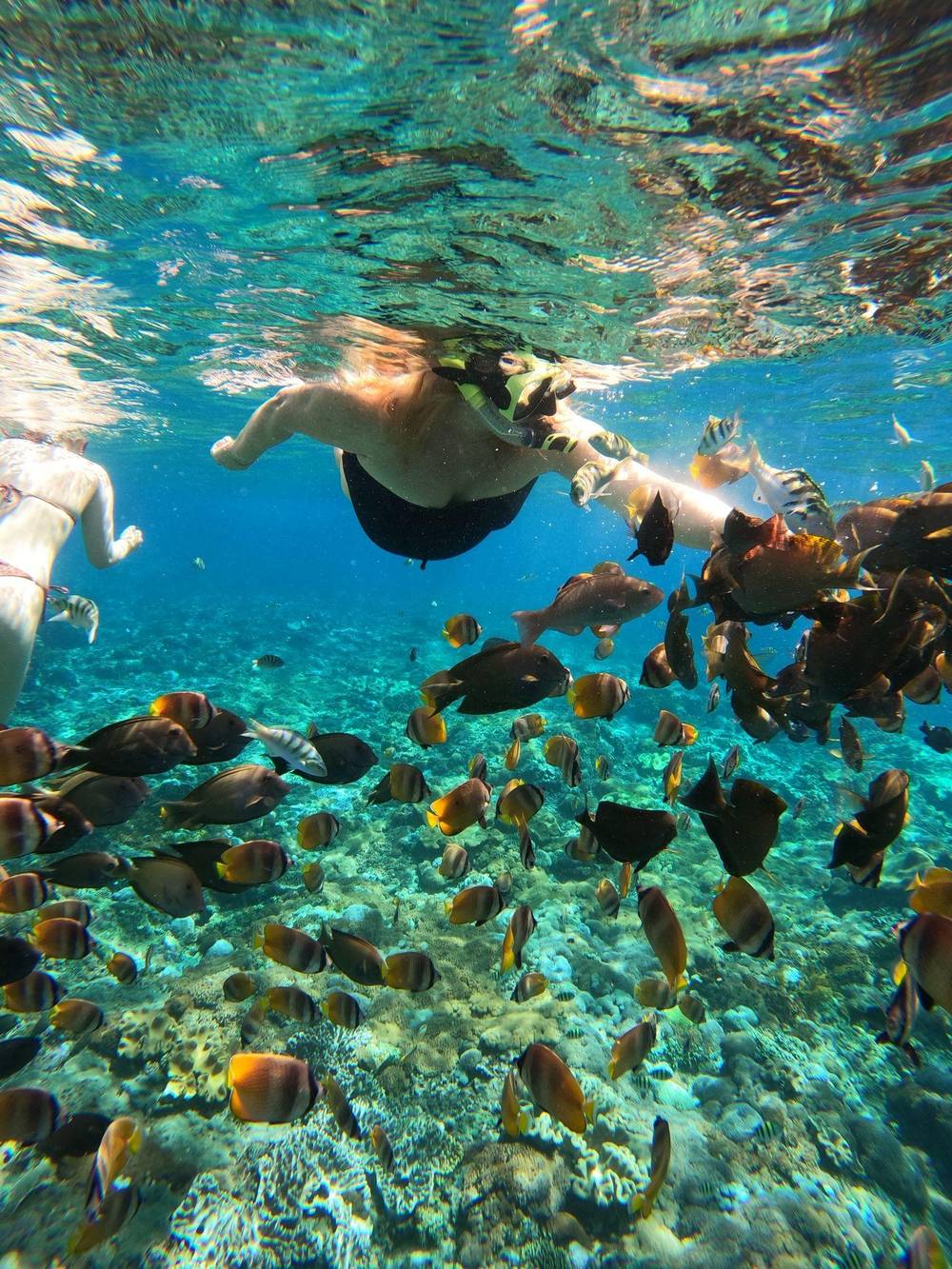
Turtles and reef fish are the fair-weather bonus for both groups. Our listing says manta sightings depend on conditions and cannot be promised, and no listing here offers a guarantee of any animal. Plan the day around the experience of being in warm, clear water in good company, and let the animals be a pleasant surprise. Travelers who have only one day on the island may find that a snorkel session fits more easily around a ferry timetable than a long dive day does. If Nusa Penida manta ray diving is what you came for, a certified day or an introductory dive gives you the longer look.
Video
Divemaster Austin on YouTube · The video stays still until you press play.
be careful when swimming, snorkelling or scuba diving near motor-powered boats or where there is frequent passage of boats
Checklist
Australia's travel advice lists scuba diving and snorkelling among the activities that carry risk, and tells travellers to check that their insurance covers them.2 It also advises care when swimming, snorkelling or diving near motor-powered boats or where boats pass often, which describes every popular bay on this coast.5
Water movement is the island's special feature. In the strait north of Nusa Penida the tidal flow at peak tide is about three and a half knots, and the streams in the Badung Strait are semi-diurnal.9 A snorkeler on the surface and a diver on a drift site feel that flow differently, and a guide who reads it is worth more than any piece of equipment.
Whichever way you go, ask how many guests share a guide, which safety gear is on the boat, and what happens when the sea is rough. The advice from the Australian government on boat trips is to check for life jackets, GPS and communication equipment and to wear a life jacket at all times.10
FAQ
A dive-center listing offers a 15-minute introductory dive for guests without a certificate.
That listing is for certified divers only and asks you to bring your certification card.
Our listing counts about 2 hours of snorkeling across three stops.
Our snorkel session starts from $17 and the three-dive day from $247.
That is when sunfish occurrences are high there, as upwelling peaks.4
Our listing says guests must be confident swimmers comfortable in open ocean conditions.
Australia's travel advice names scuba diving and snorkelling among the risky activities.2
Sources
Keep reading
Unsure about the boat, the bays or the sea? A person replies here.