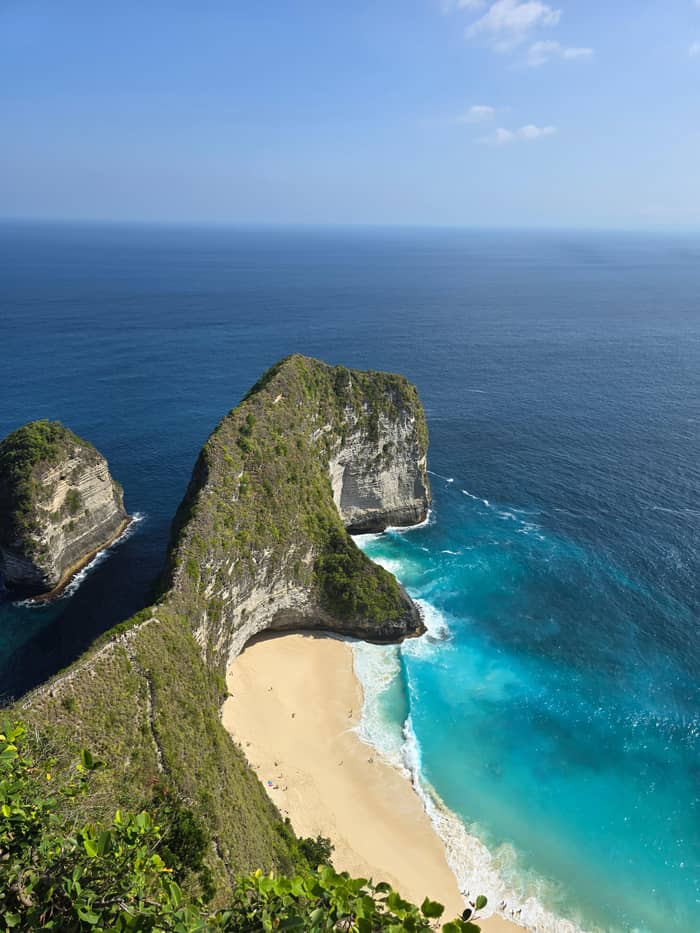
Lowest start price
Three stops from the island
Manta Bay first
- SnorkelingRoughly 2 hours
- Pricefrom $17
- Rating4.68
Find the bay
In one breath
Manta Point on Nusa Penida lies on the southern side of the island and is a cleaning and courtship station used mainly by adult reef mantas, about 12 km from Manta Bay.
Place and season
11 places to find
Choose a bay, then press a pin or a name for its story and a Google Maps link.
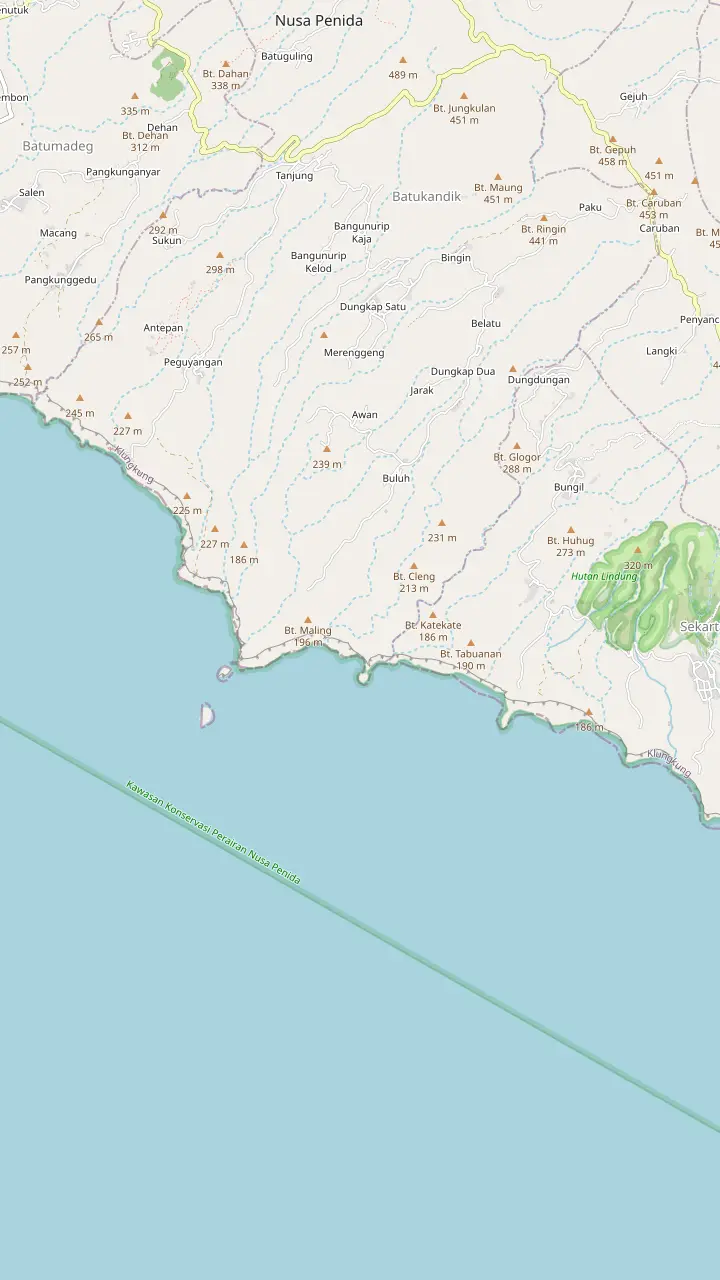
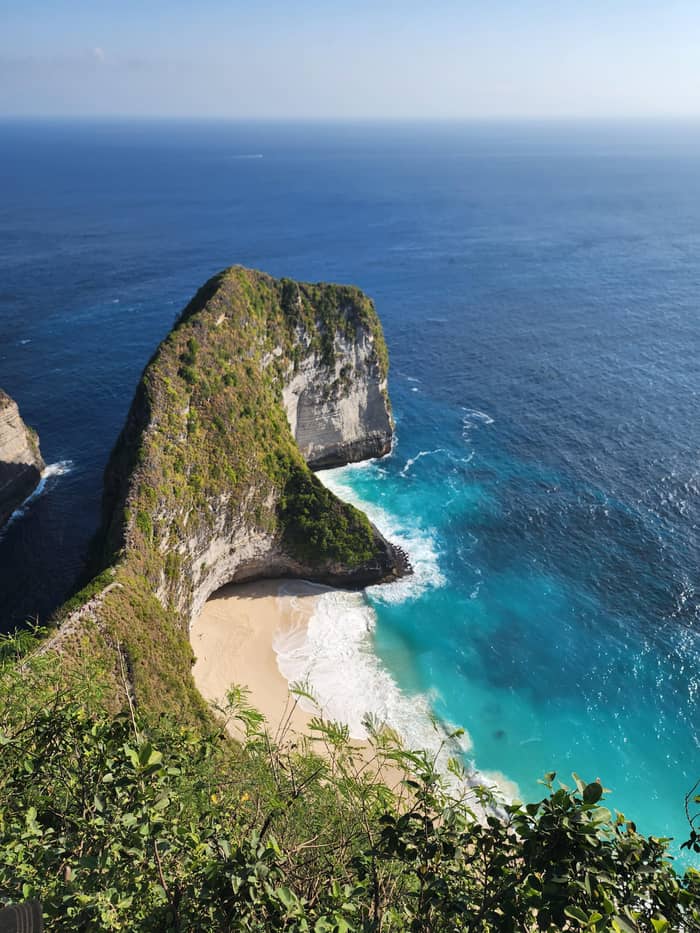
OpenStreetMap marks a cliff viewpoint just north of the Manta Point sea site.
Google MapsMantas are present here year-round, with courtship matching the annual peak in sightings in May.
Google MapsOpenStreetMap marks a second viewpoint named for Manta Point about 2.7 km to the east.
Google Maps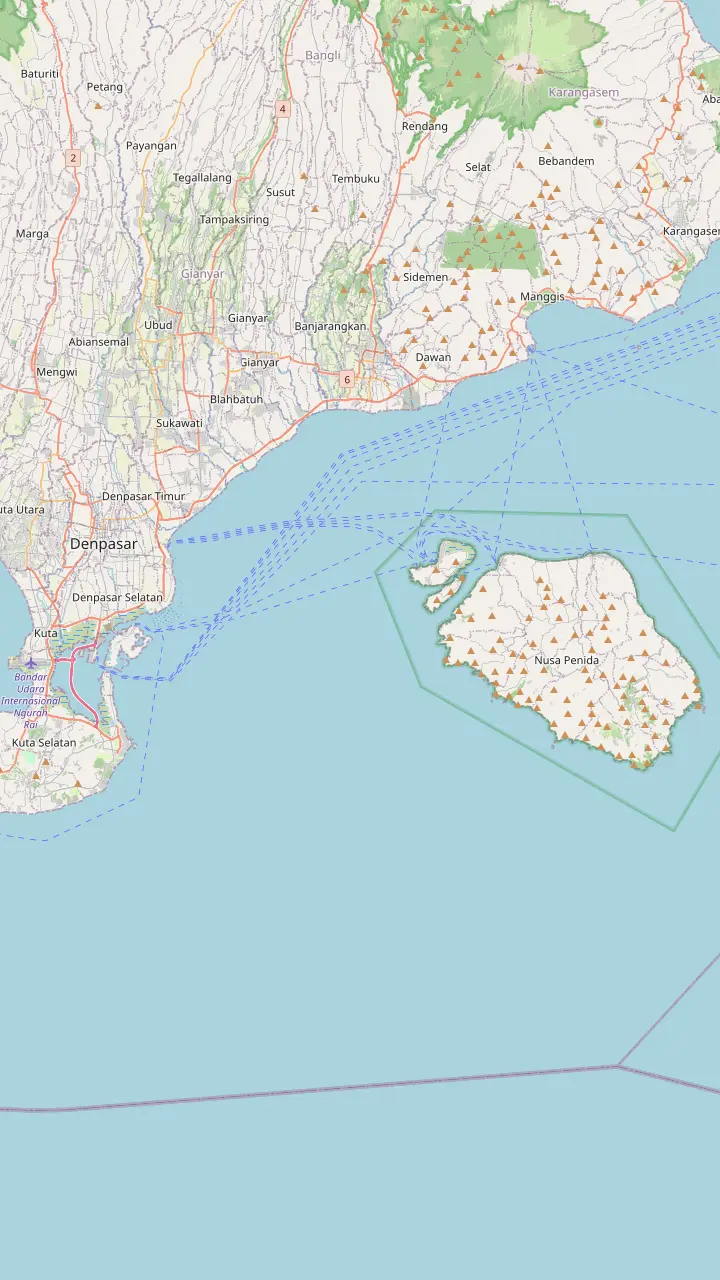
Our fast-boat listing starts here, with the boat leaving Bali at 7:30 or 8:00 AM.
Google MapsThe Bali provincial page says Crystal Bay is easily reached by scooter from this harbor.
Google MapsResearch calls it a feeding ground used mainly by males and juveniles, and possibly a nursery.
Google MapsIndonesia.Travel puts it on the southern side of the island; adults use it for cleaning and courtship.
Google Maps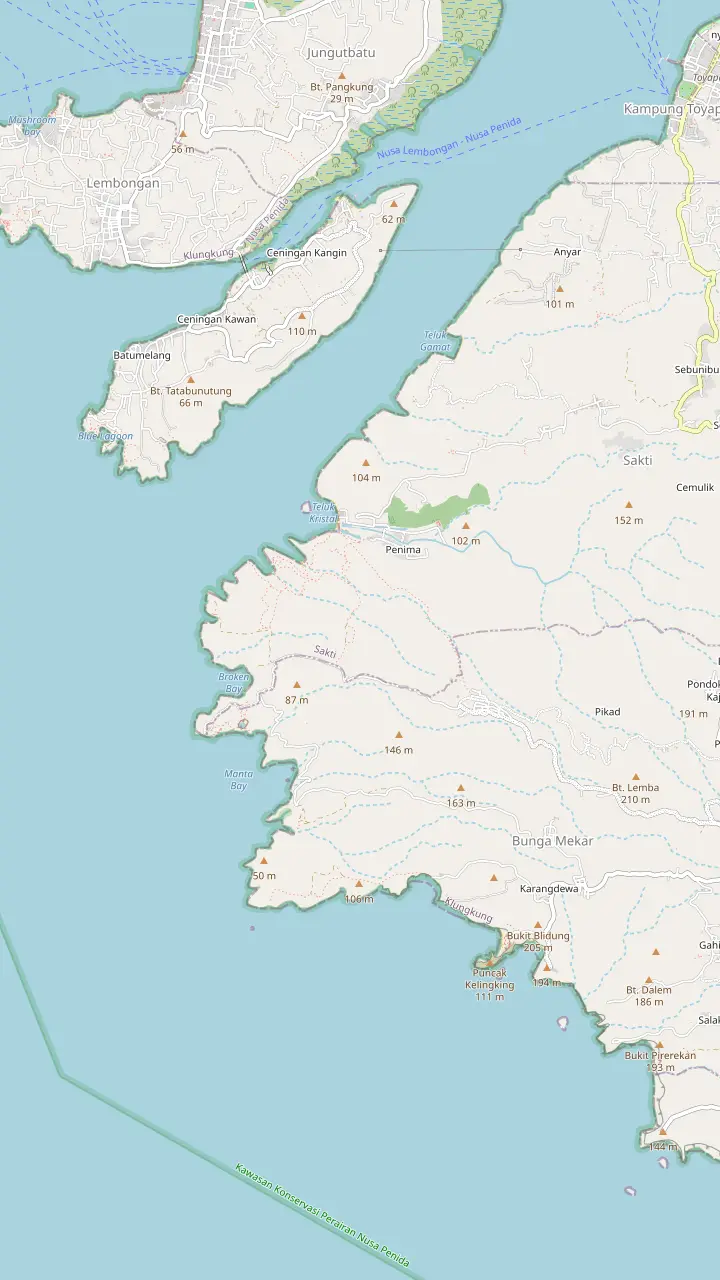
Remote, with mostly snorkel and dive boats in the morning, and a current that can be very strong.
Google MapsIndonesia.Travel puts it about 15 km from Nusa Penida Harbour, and gear can be rented on the beach.
Google MapsOur island session's west land tour includes it, with 40 minutes on the listing's itinerary.
Google MapsThe west land tour of our island session also stops here, for 50 minutes on the listing's itinerary.
Google MapsMap imagery and data © OpenStreetMap contributors
Manta Point is the south-coast cleaning station where adult reef mantas gather, and it is a different place from Manta Bay. Here is how the two differ, which listings visit which, and how to behave in the water.
Editorial team, nusapenidasnorkeling.quest · Updated November 3, 2026 · Reading time about 7 min
Begin with this
Nusa Penida is a small island 18 km south-east of Bali.4 Around it sit two shallow sites that people lump together as the manta spots, and a search for manta point nusa penida usually wants just one of them. Reef mantas stay in the Marine Protected Area all year, which has made snorkeling and diving there a hotspot.5 The two places are Manta Bay and Manta Point, about 12 km apart, and Indonesia.Travel puts Manta Point on the southern side of the island.2,1
A photo-identification study logged 624 reef mantas in 5,913 sightings over six years.6 Sightings were split almost evenly, 3,029 at Manta Bay and 3,058 at Manta Point.7 By that count the two sites are close to equal. A lead scientist on the work said the resighting rates of individual mantas in this protected area are higher than anywhere else in the world.8
Both bays are shallow, 7 to 25 m deep, fringed by steep rocky cliffs and deep water.9 That shape matters to a snorkeler less than the name on the booking page does. The island-based session we sell lists Manta Bay as its first stop, not Manta Point, and the sections below explain what that means for what you can expect.
Two sites side by side
| Point of comparison | Manta Bay site | Manta Point site |
|---|---|---|
| Main use by the mantas | A feeding ground, possibly a nursery.2 | A cleaning and courtship station.2 |
| Who is seen most | Immature males, with 64 percent of rays male.10 | Mature females, 48 percent of sightings.10 |
| Sightings logged in six years | 3,0297 | 3,0587 |
| How deep the water is | 7 to 25 m9 | 7 to 25 m9 |
| Seasonal bump | Slightly higher in February to April and July.11 | About twice as many sightings in May.11 |
| Where the listings go | Named in 5 of the 7 listings compared. | Named in 4 of the 7 listings compared. |
Study figures cover January 2012 to April 2018; listing names come from the seven GetYourGuide listings we compared.7
Manta Point is a cleaning and courtship station used mainly by adults.2 A cleaning station is a patch of reef where small fish pick parasites and dead skin off a manta.5 Mature males and females seem to prefer this site over Manta Bay, and social activity and courtship are seen here, with the mating season peaking in May.3 In the study's count, mature females were the most frequent sightings here, at 48 percent.10
Manta Point recorded about twice as many sightings in May as in other months, while Manta Bay only edged up from February to April and again in July.11 Reef mantas grow up to 5 m across.5 In the same study, 44 percent of the individual rays moved between the two sites, so some animals are regulars at both bays.12
None of this makes a sighting a promise. The animals are wild and busy with their own routine. The listing for our session says manta rays are met about 30% of the time on average and are not guaranteed, and that if Manta Bay cannot be entered because of weather or sea conditions a safe alternative snorkeling site is visited. A page that promised a manta would be wrong on its face.
Hours spent snorkeling
Each bar is the total snorkeling time the listing's own good-to-know list gives; transfers and the optional land tour are extra.
Read the stop list before you read the title. The island-based session sold on this site lists Manta Bay, Gamat Bay and The Wall, with Crystal Bay as an optional alternative to The Wall, about 2 hours of snorkeling in total and 40 minutes at each stop. A different GetYourGuide listing is built around Manta Point itself: it gives Manta Point and Gamat Bay 1.5 hours apiece, adds an optional 20-minute snorkel at The Wall, and totals about 3 hours of snorkeling.
Two more listings are worth knowing. One starts from Lembongan and gives Manta Point 45 minutes, then Gamat Bay and Mangrove Point 30 minutes each. Another is a fast-boat day from Sanur, shared with a maximum of 13 guests on board, that names Manta Bay, Manta Point or Secret Bay depending on sea and weather conditions. In every case the stop list, not the headline, tells you which of the two sites you will be at, and each listing carries a weather caveat.
If your heart is set on Nusa Penida Manta Point, the south-coast cleaning station, the Manta Point listing is the closer match. If you want three stops in one session at the lowest starting price, the island-based session is. It starts from $17 against from $26 for the Manta Point listing.
Pick your manta day
Match the stop list to the thing you came for, then check the weather note in the listing.
If I want Manta Point by name
Choose the Manta Point listing
Manta Point and Gamat Bay get 1.5 hours apiece, for about 3 hours of snorkeling.
If Cheapest start is my priority
Choose the island session
It starts from $17 and lists three stops with about 2 hours of snorkeling.
If I want the mating-season peak
Aim for May at Manta Point
Manta Point logged about twice as many sightings in May, though no listing promises a ray.11
If I would like fewer people aboard
Ask about the group size first
One fast-boat listing caps its shared tour at 13 guests on board, and the Coral Triangle Center favors small tours.13
If I am a shaky swimmer
Read the safety page before booking
The listing requires confident swimmers who are comfortable in open ocean conditions.
Three ways to meet the bays
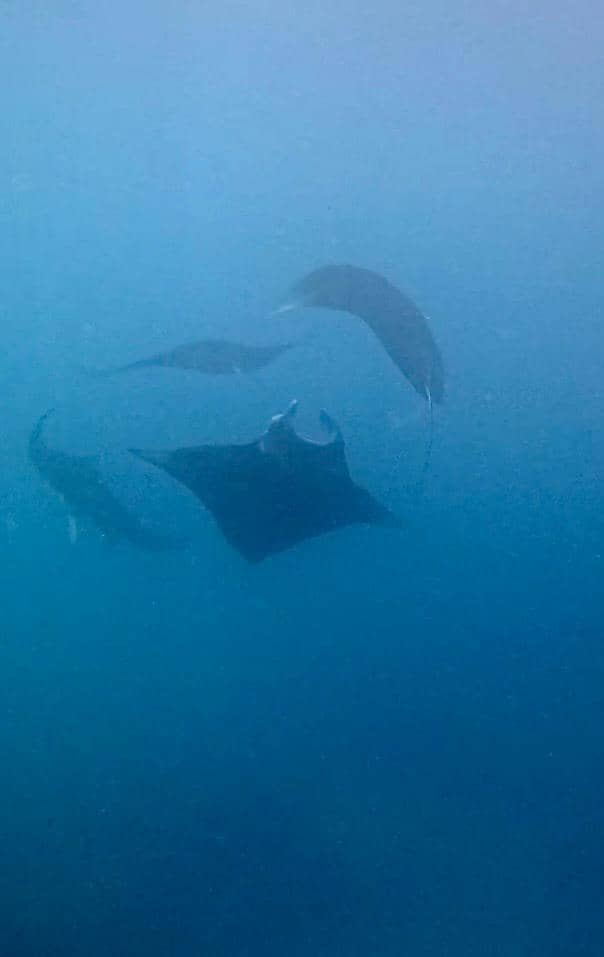
Lowest start price
Manta Bay first
Closest to the search
Manta Point first
Full-day outing
Max 13 on board
Snorkeling at Manta Point in Nusa Penida is a boat trip first and a swim second, so plan the day around the boat, not the beach. The run to Manta Point is by boat, and one listing warns that it may pass through open sea with waves, so guests may get splashed. The listing for our session adds that roads on Nusa Penida are narrow and bumpy and that the sea may be choppy, and it advises eating before the tour and taking seasickness medication if needed.
Swimming level matters. Our listing says guests must be confident swimmers and comfortable in open ocean conditions. The Manta Point boat listing asks for a basic swimming level. One fast-boat listing strongly recommends a life jacket at all times on board and when entering the water. If you are unsure of yourself, wear the jacket and tell the guide before the boat leaves.
A GoPro film of your session arrives by email as a link 8 to 12 hours after the activity, per the listing. The film is the proof of what you saw: a manta in the water is over in moments, and footage lets you slow it down afterwards. Meet your team at the island meeting point named in the listing, with the voucher ready.
The session as the listing sets it out
When you arrive
The listing asks you to meet the team at Wonderland Manta Penida under the GetYourGuide sign with your voucher ready.
Opening stop
The itinerary gives Manta Bay 40 minutes, and the listing warns that mantas are met about 30% of the time on average.
If the sea says no
When Manta Bay cannot be entered because of weather or sea conditions, the listing says a safe alternative snorkeling site is visited.
Stop two
The itinerary lists Gamat Bay next, also at 40 minutes.
Third slot
The itinerary lists The Wall at 40 minutes, with Crystal Bay or SD Point offered as optional alternatives; about 2 hours of snorkeling in all.
8 to 12 hours later
The footage link is emailed to the booking address 8 to 12 hours after the activity.
The Manta Trust code, as the Marine Megafauna Foundation sets it out, is short: keep at least 3 m away, approach from the side, stay passive, and never chase, touch or dive down in front of a manta.19 The Coral Triangle Center's codes for Nusa Penida add that you should swim slowly, not block the animal's route, not enter a manta cleaning station, never use flash photography and report anyone who breaks the rules.20
Distance is not only etiquette. In a Maldives study of snorkelers, mantas within 3 m showed avoidance in 31% of interactions, and at 4 to 5 m that fell to 3.4%.21 That is another country and another site, so read it as a rule of thumb for how mantas respond, not as a measurement taken at Nusa Penida. At a cleaning station the advice is to stay low, still and off the reef.22
The animal itself is not the danger. Manta rays filter zooplankton, have no venomous barb and do not bite people.23 The risk runs the other way: a research photo caption from Manta Bay shows a male reef manta with snorkelers swimming behind it, and the researchers call the scene busy with snorkelers and boats.24 A guide who briefs you before the entry and keeps the group together is doing the job well.
Video
Liga And Peter on YouTube · The video stays still until you press play.
Manta Bay is a feeding ground used mainly by males and juveniles, and may be a nursery; Manta Point is a cleaning and courtship station used mainly by adults
Water manners and boat basics
Nusa Penida attracted more than 200,000 tourists a year at the time of the 2019 study, and of the 11 main dive spots Manta Bay and Manta Point were used most by tour operators.25 The average annual number of boats at the two sites rose 60% between 2012 and that study.26 Large diving groups and engine noise can cause chronic stress to the animals.27
The rules have been soft. Manta rays are protected in Indonesia, yet when the study was written the number of boats allowed into manta habitat was unlimited and codes of conduct were voluntary.28 All fishing is officially prohibited at both sites.29 The researchers proposed limiting vessels, making the codes mandatory and considering a seasonal closure of Manta Point during the mating period.30 Those were proposals in the 2019 study, so check current rules locally.28 The International Maritime Organization has since designated the island's waters a Particularly Sensitive Sea Area.31
What you can do is choose small groups. The Coral Triangle Center advises booking providers that run small tours and respect the protected-area rules, and it counts eight Green Fins certified operators in Bali Province.13 Ask your operator which code it follows, and enter the water with the group, not ahead of it. Sightings depend on sea and weather conditions, so a flexible day beats a hopeful one.
FAQ
Manta Bay is mostly a feeding ground for males and juveniles; Manta Point is a cleaning and courtship station used mainly by adults.2
The study gives that depth range for both Manta Bay and Manta Point, which are fringed by steep rocky cliffs.9
The listing for our session puts the average at about 30% of the time and says sightings depend on weather and sea conditions.
Mantas have no venomous barb and do not bite; the listing still requires confident swimmers because of open ocean conditions.23
A 1,502-review listing names Manta Point and Gamat Bay with about 3 hours of snorkeling.
Sources
Keep reading
Unsure about the boat, the bays or the sea? A person replies here.