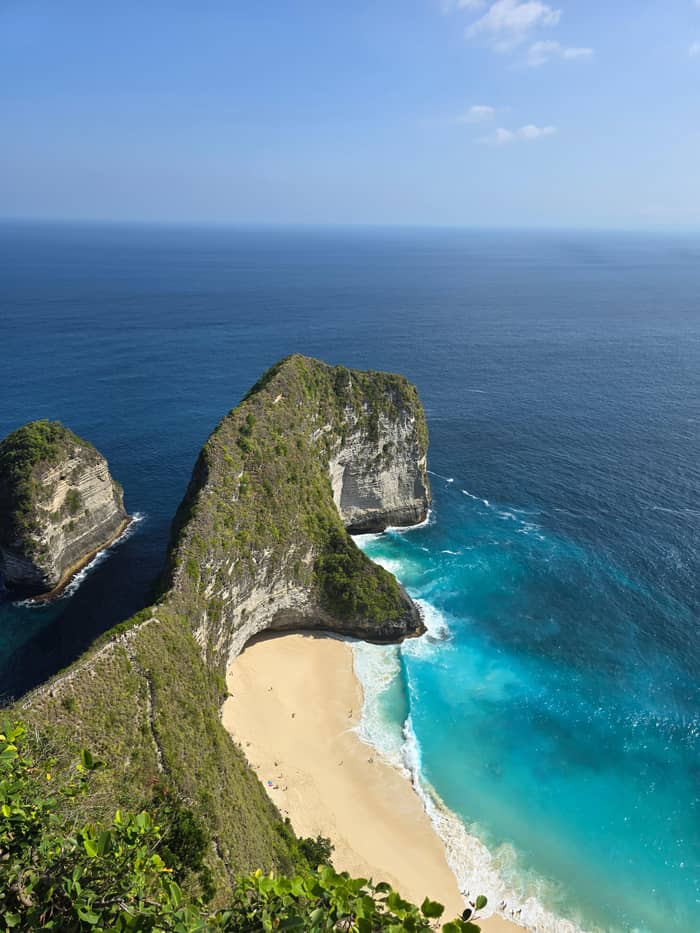
Shared snorkel
Our shared session
About 2 hours in the water
- Length2 to 9 hours by option
- Rating4.68 from 5,062
- Pricefrom $17
Tick-off list for snorkelers
In one breath
Snorkeling at Nusa Penida suits confident open-water swimmers, and Australia's travel advice tells you to check for life jackets, GPS and radios on any boat.
Safety points
Packing list · 10 items
Mark each item when it is done; the marks stay on this device.
0 / 10 ready
All packed and checked. Only the booking is left: your seat on the snorkel boat.
Keep my seatIt can be done well, and it can go wrong. The strait is strong, the boats vary and the listings set real limits on who should get in. Here is what an official source says, what the tours demand and a checklist you can tick off before the day.
Editorial team, nusapenidasnorkeling.quest · Updated November 3, 2026 · Reading time about 6 min
Begin with this
The clearest official voice on the subject is Australia's travel advice for Indonesia. It says many beaches are unpatrolled and can be dangerous because of rough seas and strong currents, and that travel by boat or ferry can also be dangerous.5
It goes on to say that swimming conditions can vary and change rapidly, and asks travelers to take all warnings seriously.6 It names scuba diving and snorkelling among the risky activities and advises checking that your insurance covers them.7 None of this singles out Nusa Penida for blame. It is a baseline for the whole country, and it is the baseline to read before you book.
The advice also asks for care when snorkelling near motor-powered boats or where boats pass often, which is a fair description of the busy bays on this coast.8 That point is easy to forget when you float face down: you cannot see the traffic. A guide who keeps the group together and watches the boats is part of your equipment, so judge an operator by how it briefs you and how it counts heads, and not only by its price or its photographs.
Five listings, five limits
| Outing | Limit it states | Where it appears | Group |
|---|---|---|---|
| Our island session | Confident open-ocean swimmer | Good-to-know notes | Private group available |
| Full private day | No impaired mobility, no high blood pressure or epilepsy | Prohibitions list | Private |
| Shared manta day | Under 10 or over 60 with conditions may be refused | Notes and waiver | Small group available |
| Premium yacht | Good fitness level | Good-to-know notes | Private group available |
| Fast boat ticket | Not for pregnancy or serious heart or back conditions | Good-to-know notes | Boat with others |
Limits are quoted from each listing's own notes; read the listing you book, since the same bay can carry different rules on different boats.
Marine transport is where the official advice is sharpest. Operators may not meet international safety and maintenance standards, equipment may be poorly kept, GPS and emergency communications may be missing and there may not be enough life jackets.1 The advice lists a March 2025 incident in which a tour boat capsized in rough seas near Nusa Penida, with one death and 12 injured passengers.3
The steps it recommends are specific and cheap. Ask the operator or crew about safety standards, check that the boat has safety equipment, GPS, communication equipment and life jackets, always wear a life jacket, and check sea and weather forecasts before boarding, delaying travel if conditions are unsafe.2
Tour listings echo the life jacket point. Two private-boat listings say that wearing a life jacket is strongly recommended at all times in the water, and another says the same on board and when entering the water. Take that advice literally, even if the water looks flat. A jacket that you hold in your hand on the deck does nothing for you in the water, and a good briefing will tell you where the spare ones are kept and how to adjust the straps. Nusa Penida snorkeling safety starts with the boat and ends with your own judgment in the water.
Time in open water
Each stop length is the listing's own figure; the private Manta Point listing gives 1.5 hours at each of its two bays.
Operators write their limits into the listing. Ours says guests must be confident swimmers who are comfortable in open ocean conditions. Another says basic swimming ability is required for snorkeling and that the experience may not suit travelers who are prone to seasickness. A private-boat listing asks guests to feel confident swimming in swell and waves.
Physical limits are listed too. A full-day private tour and an island-start boat are not recommended for anyone with impaired mobility or certain medical conditions, such as high blood pressure or epilepsy. The premium yacht day says a good fitness level is needed.
One shared manta day sets age limits: guests under 10 or over 60 who have conditions listed in its notes may be denied entry without a refund, and all guests sign a waiver form. Read the limits of the exact listing you pick, because they differ from one operator to the next. If you have a heart, back or breathing condition, or you are pregnant, speak to a doctor before you book, and tell the guide on the day about anything that could affect you in the water.
Your own position
Say what worries you and read the matching step
If I do not swim well
Choose a land day
The snorkel listings ask for confident swimmers.
If Seasickness is my worry
Eat first and bring tablets
Our listing advises this.
If A small child comes along
Ask about child life jackets
The official advice says crews may not carry them.1
If Whitecaps on the strait
Wait or move the date
Our listing swaps Manta Bay for a safe alternative site.
If I want an extra margin
Choose a small group
A private group is available on our listing.
Gentler options
Shared snorkel
About 2 hours in the water
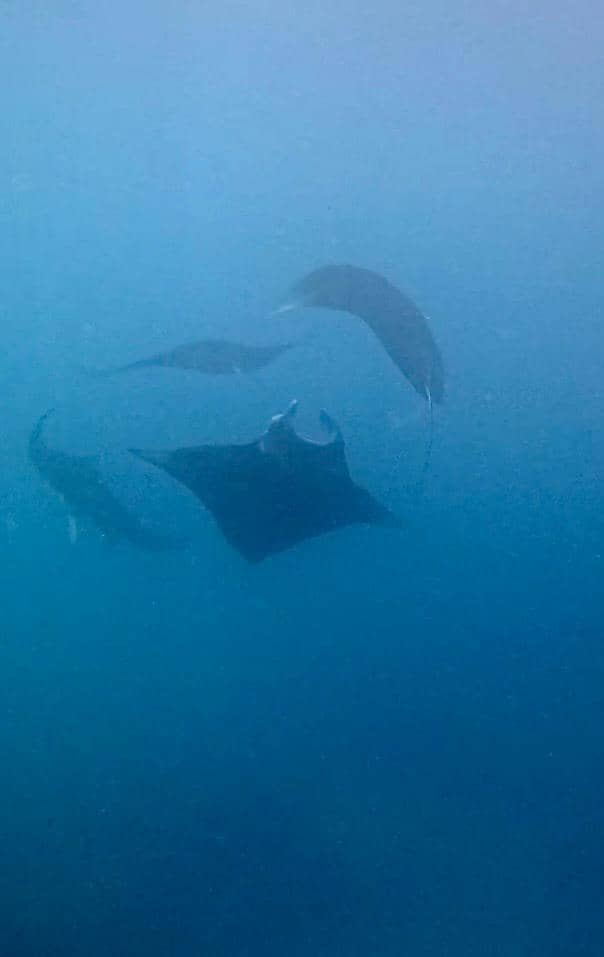
Private
Island start, one boat
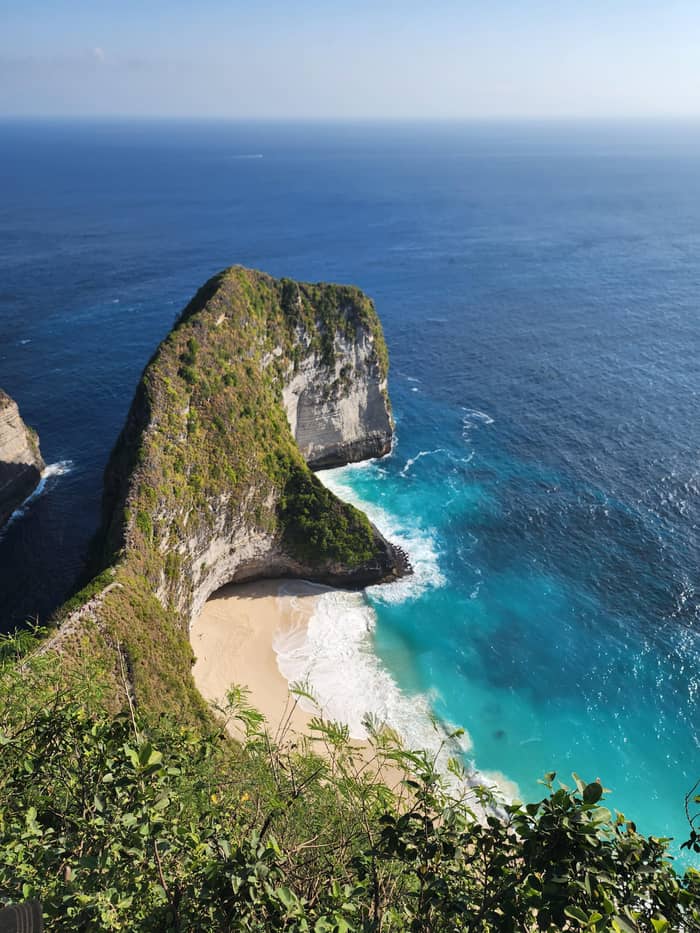
No swimming needed
No snorkeling
The sea decides the schedule, and good operators say so in writing. Our listing states that if weather or sea conditions rule out Manta Bay, the team goes to a safe alternative snorkeling site, and it adds a warning about choppy water and about narrow, bumpy roads on land.
Other listings use similar language. One says the itinerary may be changed at the last minute for safety because of strong Indian Ocean swells, and that the guides choose the spots on the day after seeing the water and weather. A private Manta Point visit warns that the water might be very choppy.
Seasonal weather matters as well. In the north-west monsoon season, December and January, unfavorable weather limited access to the study sites of a manta research team, and the tidal flow in the strait can reach about three and a half knots at peak tide.9,4 A flexible date and a free-cancellation booking keep a rough morning down to a lost day and not a lost trip.
The safe version of a snorkel morning
The evening ahead of it
Hotel pickup times are confirmed by WhatsApp by 8:30 PM the day before.
Before the boat
The listing advises eating first and taking seasickness medication if needed.
At the jetty
A private-boat listing opens with a safety briefing of 30 minutes.
Once you swim
Listings strongly recommend one at all times in the water.
At each bay
Stops last 40 minutes each on our session; follow the guide's lead.
After the swim
The GoPro link arrives by email 8 to 12 hours later.
The honest answer for a non-swimmer is that the snorkel listings in this guide are not designed for you. They ask for confident swimming in open water, and a life jacket does not change that requirement. A land-only listing that skips the water exists: a private east and west highlights day lists stops at Angel's Billabong, Pasih Uug Beach, Kelingking Beach, Diamond Beach and Atuh Beach. Nusa Penida snorkeling for non-swimmers is a request the listings here answer with a plain no.
Children need care. The shared manta day with kayaking notes the age limit above, and the fast boat ticket listing says boarding means wading through knee-deep seawater and is not suitable for pregnant travelers or guests with serious heart, back or physical conditions. Ask the operator about child-size life jackets before you commit, because the official advice warns that crews may not have them.1
Seasickness is the next concern on a choppy crossing, and the listings' own advice is plain: eat beforehand and take seasickness medication if needed. A transfer listing recommends taking tablets 30 to 60 minutes before departure.
Video
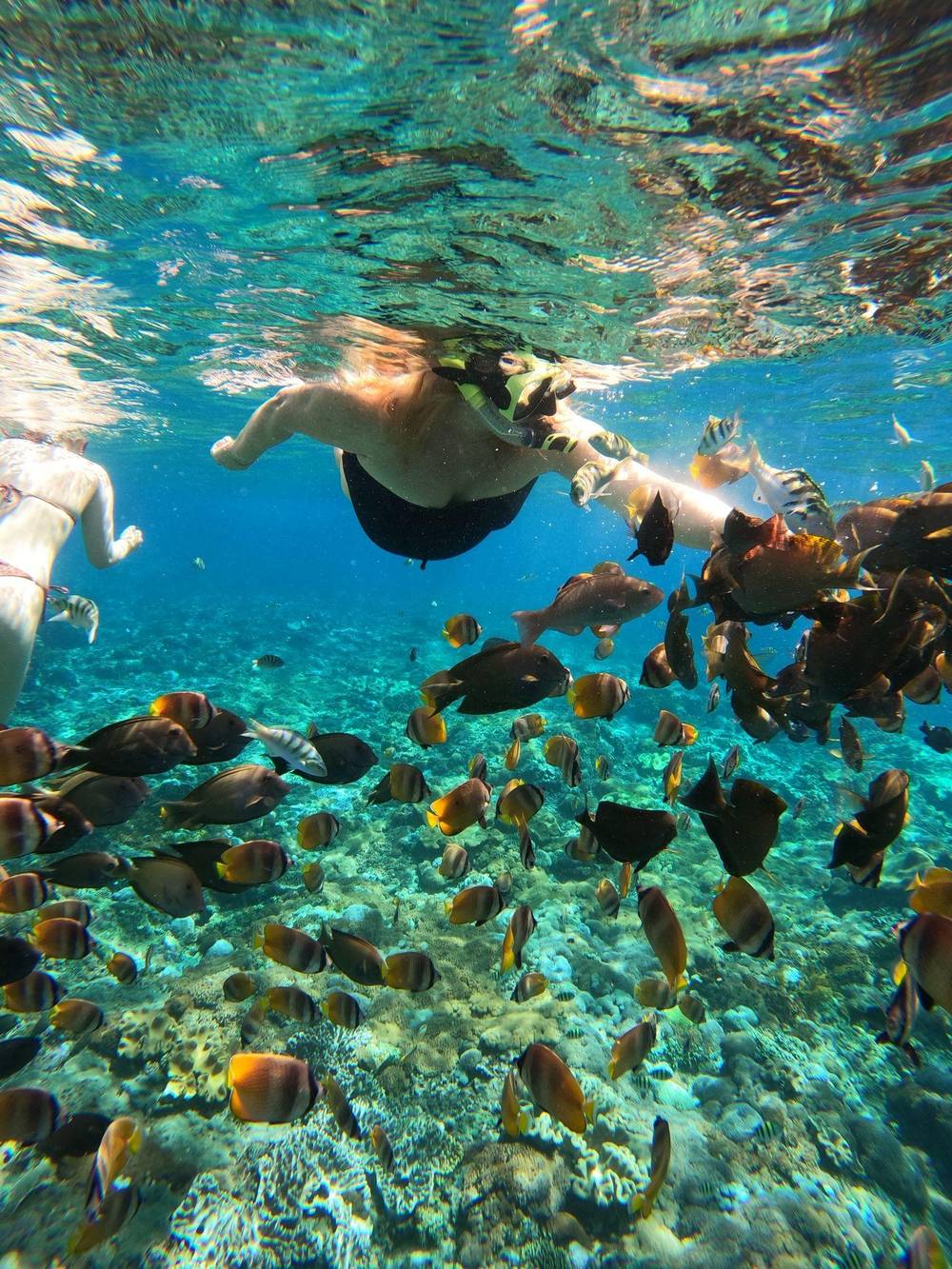
With the Sparrows on YouTube · The video stays still until you press play.
Swimming conditions can vary and change rapidly. Before you dive into the water be informed: take all warnings seriously
Safety runs both ways. Indonesia protected both manta ray species across its whole exclusive economic zone in 2014 under Ministerial Decree 4/2014, and the researchers who study the Nusa Penida population say the number of boats allowed into manta habitat was unregulated when they wrote.10,11
Listings set their own rules: one says touching, feeding, chasing or interacting with marine life is not allowed, and another says the tour follows marine animal welfare standards, with observation only. Our own listing says it follows responsible wildlife viewing guidelines.
As a visitor you can add one habit: keep your distance and let a manta choose to approach. A reef manta ray is typically 3 to 3.5 m across the disc, so a crowd of swimmers around one is a real intrusion.12 Calm behavior keeps you safe, keeps the animal at ease and keeps the next group's encounter as good as yours. If you are unsure what to do when a manta swims toward you, float still, keep your arms close to your body and let the guide direct the group.
FAQ
Our listing says guests must be confident swimmers who are comfortable in open ocean conditions.
They ask for confident swimming, and one lists basic swimming ability as required.
The tidal flow in the strait north of the island is about three and a half knots at peak tide.4
Several say a life jacket is strongly recommended at all times in the water.
Our listing states that it visits a safe alternative snorkeling site.
One lists under 10 and over 60 with certain conditions as a refusal case, with a waiver for all guests.
Australia's travel advice names scuba diving and snorkelling among the risky activities.7
The government advice lists those items and tells you to check for them before boarding.2
Sources
Keep reading
Unsure about the boat, the bays or the sea? A person replies here.